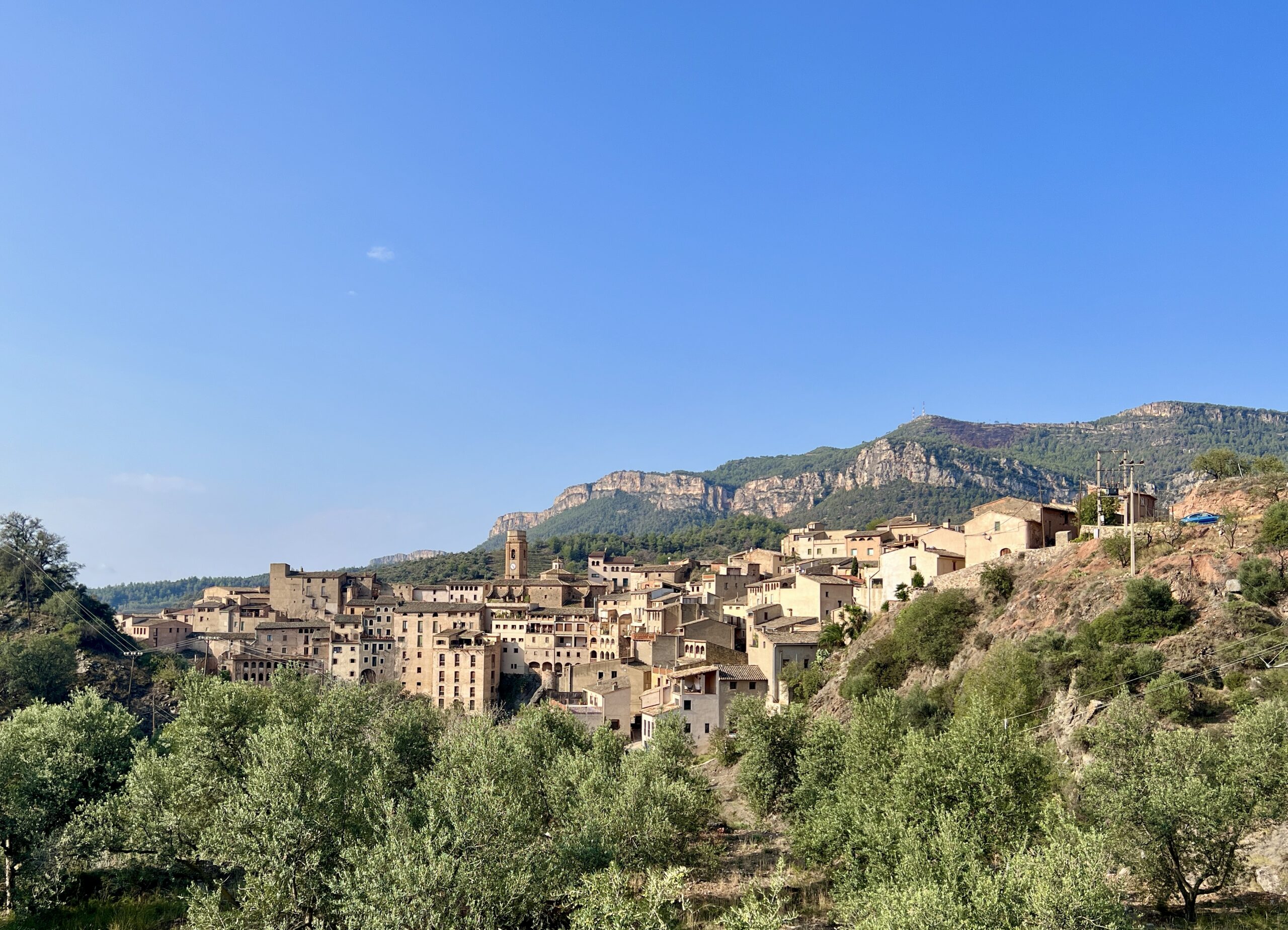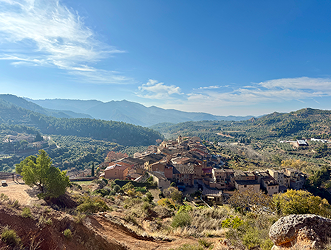
Buying a house in Priorat is much more than acquiring property in a prestigious wine region. For many international buyers, it means finding a home with character, tranquility, scenery, authenticity, and a lifestyle connected to the land. This region in Tarragona combines historic villages, terraced vineyards, traditional stone architecture, and a growing demand from buyers looking for a second home, an investment, or a slower, safer change of pace.
In this guide, you will learn about the types of properties available in Priorat, who typically buys in the area, the main steps of the buying process, the costs and taxes you should anticipate, and the mistakes to avoid before signing. If you are thinking about buying a house in Priorat or exploring the local real estate market, this guide will help you make decisions with greater confidence.
1. Property types in Priorat and the international buyer profile
The real estate market in Priorat is very different from that of large cities or Spain’s more crowded coastal areas. Here, the supply is usually more limited, more unique, and closely tied to the history of each village. This means that buying a property in Priorat requires patience, local knowledge, and a good understanding of the actual condition of each property.
Traditional village houses
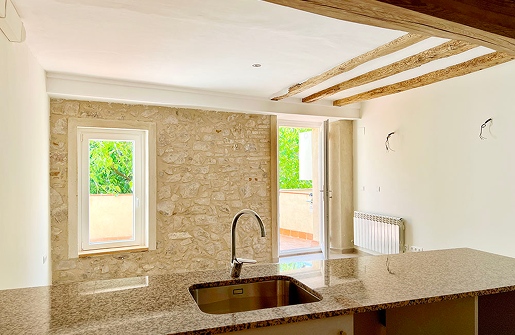
One of the most sought-after products is the village house. These are homes located in centers such as Gratallops, Porrera, Falset, Torroja del Priorat, Poboleda, La Vilella Alta, La Vilella Baixa, Escaladei, or Bellmunt del Priorat. Many retain original elements like stone walls, wooden beams, old wine cellars, arches, terraces, interior courtyards, or vineyard views.
These properties especially attract buyers who value authenticity. They can be perfect as a second home, a family house, a rural tourism project, or a home for remote work in a peaceful environment (villages in Priorat have fiber optic internet). However, it is important to thoroughly review their structural condition, utilities, roof, insulation, access, and actual renovation potential.
Country estates and farmhouses
Country estates and farmhouses (masías) are another highly demanded property type, especially by buyers seeking privacy, land, nature, or a project related to wine, olives, almonds, or rural tourism. In Priorat, these properties can be very attractive, but they also require a more careful legal and zoning analysis.
Not all constructions on rural land can be expanded, renovated, or used for tourism activities. Before buying, it is advisable to check the land’s zoning classification, the legality of existing buildings, access to water, electricity, roads, internet connection, and environmental or agricultural limitations.
Renovated move-in ready homes
There is also a growing demand for already renovated houses. This type of property usually interests foreign buyers who want to avoid complex construction work, especially if they do not live in Spain year-round. A renovated home can save time and stress, but it does not eliminate the need to review licenses, the quality of the renovation, energy efficiency, and documentation.
In villages with good locations, basic services, and views, renovated houses with terraces, heating, good insulation, and outdoor spaces can have high demand and sell quickly if the price is right.
Properties with tourist licenses
Priorat has a very clear tourist appeal: wine, gastronomy, landscape, hiking, tranquility, and heritage. For this reason, some buyers look for properties with a tourist license or the potential to obtain one. This profile usually includes small investors, families who want to rent the house part of the year, or buyers who wish to combine personal use with income.
Before basing a purchase on tourist rentals, it is essential to verify that the license exists, that it is valid, that it is transferable, or that it can be requested according to applicable regulations. You also need to calculate the costs of management, cleaning, maintenance, taxes, insurance, and promotion.
Who buys in Priorat?
The international buyer in Priorat is usually very different from the beach buyer. They seek authenticity, landscape, silence, local culture, safety, and quality of life. Many come from Northern Europe, the UK, France, Belgium, the Netherlands, Germany, Scandinavia, or the United States. Some are looking for a second home; others want to retire in Spain, start a rural project, invest in a charming property, or relocate permanently.
There are also domestic buyers, especially from Barcelona, Tarragona, and other areas of Catalonia, looking for a weekend home or a refuge away from the city.
The key is to understand that Priorat is not a volume market. Good opportunities exist, but they usually require speed, analysis, and local advice.
2. Steps in the buying process in Priorat
Buying a property in Priorat follows the general buying process in Spain, but with important particularities due to the type of housing, the age of the properties, and the rural setting.
Step 1: Define the purchase objective
Before visiting properties, it is advisable to clearly define the objective. Buying a house for vacations is not the same as a permanent home, a tourism investment, or a country estate with land. The actual budget must also include taxes, expenses, possible renovations, and maintenance.
Useful questions before starting:
- Do you want to live there year-round or just seasonally?
- Do you need a tourist license?
- Are you open to a renovation or looking for something move-in ready?
- Do you prefer to be inside the village or on an isolated estate?
- Is it important to have heating, a terrace, a garden, or a pool?
- What is your total budget including taxes and construction work?
The clearer the search profile, the more efficient the process will be.
Step 2: Property search and selection
In Priorat, not all interesting properties are visible on large real estate portals. Some sales move through local agencies and “off-market” (unlisted) sales, contacts, known owners, or trusted networks. Therefore, working with someone who knows the area can make all the difference.
During selection, it is important not to look only at the photographs. In old houses, a pretty image can hide issues with humidity, the roof, structure, old utilities, or lack of insulation. Similarly, a poorly presented property can have great potential if it is well-located and has a good structure.
Step 3: Visit and technical evaluation
The visit should serve for more than just confirming if you “like” the house. It is advisable to check orientation, light, ventilation, accessibility, the condition of the roof, walls, floors, windows, heating, electrical and water installations, humidity, cracks, and layout possibilities. Don’t forget to evaluate the surroundings. A village can show very different faces depending on the day of the week, the time of year, or the time of the visit. Therefore, it is worth visiting at different times to check the level of activity, noise, services, parking, and the actual atmosphere.
For old properties or those with planned renovations, it is recommended to have an architect, surveyor, or technician before signing a major financial commitment. A technical inspection can help calculate the actual cost of the work and avoid surprises.
Step 4: Initial legal review
Before paying a deposit or signing an earnest money contract, you must review the essential documentation:
- Nota Simple from the Property Registry.
- Actual ownership of the property.
- Possible liens, mortgages, seizures, or easements.
- Cadastral reference.
- Consistency between the Registry, Catastro, and physical reality.
- Energy certificate.
- Latest IBI (Property Tax) receipts.
- Zoning status.
- Building or activity licenses if relevant.
- Debts with the homeowners’ association, if one exists.
- Status of utility supplies.
On country estates, this review must be even more rigorous, especially if there are constructions, wells, roads, rights of way, or old buildings.
Step 5: Offer and negotiation
Once the basic aspects have been reviewed, an offer can be presented. In Priorat, the negotiation margin depends heavily on the property, how long it has been for sale, the condition of the property, and the seller’s urgency. It is possible that the price is already firm and offers will not be accepted.
A well-planned offer should not be based just on “lowering the price,” but on objective arguments: renovation costs, lack of documentation, roof condition, need to update utilities, comparison with similar sales, or payment terms.
Step 6: Earnest money contract (Contrato de Arras)
The earnest money contract is a private agreement between buyer and seller. Normally, the buyer pays an amount, between 10% and 15% of the agreed price, as a down payment to reserve the property. In Spain, if the buyer withdraws without justified cause, they may lose the amount paid; if the seller withdraws, they may have to return double, depending on the type of earnest money agreed upon.
This contract must be drafted carefully. It should include the price, deadline for signing the deed, identification of the parties, description of the property, liens, distribution of expenses, special conditions, and consequences if either party defaults.
For an international buyer, it is especially important that the contract includes conditions such as obtaining a NIE, financing, a satisfactory legal review, or pending documentation, if applicable.
Step 7: NIE, bank account, and financing
Foreign buyers need a NIE (Foreigner Identification Number) to buy property in Spain and pay taxes. It is essential to have the NIE number at the time of signing the deed at the notary. In the earnest money contract, you can identify yourself with your passport. It is also usually convenient to open a Spanish bank account, especially if there will be direct debits for utilities, local taxes, or recurring payments.
If you need a mortgage, it is better to start the process before signing the earnest money contract. Spanish banks can finance non-resident buyers, but they usually require a larger down payment than for residents. They will also request documentation of income, tax returns, bank statements, and a property appraisal.
Step 8: Signing before a notary
The sale is formalized through a public deed before a notary. At the signing, the buyer pays the remaining price and the seller transfers the property. The notary verifies the identity of the parties, the essential documentation, and the formal legality of the act.
If the buyer does not speak Spanish or Catalan, the presence of a translator or representative may be necessary. It is also possible to grant power of attorney to a lawyer or trusted person to sign on behalf of the buyer.
Step 9: Payment of taxes and registration
After signing, the corresponding taxes must be paid and the property must be recorded in the Property Registry. Registration is not just an administrative formality: it provides legal security and ensures that ownership is protected against third parties.
You will also need to change the ownership of utilities, IBI, trash collection, homeowners’ association if applicable, insurance, and other services.
3. Costs, taxes, and legal aspects
One of the most frequent mistakes when buying property in Spain is calculating only the purchase price. The buyer must anticipate taxes, notary fees, registry fees, management fees (gestoría), legal advice, translations, possible bank fees, and renovations.
Resale property: ITP
Most village houses and traditional homes in Priorat are resales. In this case, the main tax is usually the Property Transfer Tax, known as ITP. In Catalonia, the applicable rate can vary based on the property value and the buyer’s circumstances, so it is advisable to confirm the exact calculation before signing. The general rate is progressive based on the total value of the property. Up to a value of €600,000, a rate of 10% applies. For amounts above €600,000, the rate is 11%, etc.
For international buyers, it is recommended not to make overly optimistic estimates. As a rule of thumb, the total cost of purchase can often be around 11% to 14% additional over the price, depending on the case, if there is a mortgage, etc.
New construction: VAT and AJD
If the property is a new build and is purchased directly from a developer, you typically do not pay ITP, but rather VAT (IVA). For new housing, the general applicable VAT is usually 10%, with reduced rates in specific cases like certain subsidized housing. Additionally, the Stamp Duty tax, known as AJD, may apply.
In Priorat, new construction is not as abundant as in urban or coastal areas, but it may exist in some municipalities or specific projects.
Notary, Registry, and management fees
Notary and Registry fees depend on the price and complexity of the operation. A gestoría can handle paying taxes, submitting deeds, and registering the property. Although some buyers try to save on this part, good management after the signing avoids errors and delays.
Lawyer or independent advisor
For a foreign buyer, having an independent lawyer is recommended. They should not be confused with the real estate agent or the notary. The lawyer represents the buyer’s interests, reviews documentation, detects risks, negotiates clauses, and explains the legal consequences before signing.
This is especially important if:
- The property is old.
- There is rural land involved.
- There are unrecorded buildings.
- A tourist license is needed.
- The buyer does not reside in Spain.
- There are inheritances, co-owners, or liens.
- The purchase is made through a company.
- The operation includes furniture, a business, or activity.
Renovation and licenses
Many properties in Priorat need some renovation, from aesthetic improvements to full rehabilitations. Before buying, it is advisable to distinguish between a minor renovation and work that requires a municipal license, technical project, or architect intervention.
In old houses within historic villages, there may be limitations on facades, roofs, materials, or protected elements. On rural land, restrictions can be even greater. Buying without understanding what can be legally renovated can turn an opportunity into a problem.
Annual costs after the purchase
In addition to the initial cost, the buyer must anticipate annual expenses:
- IBI (Property Tax).
- Trash collection or other municipal fees.
- Home insurance.
- Utilities.
- Homeowners’ association, if one exists.
- Maintenance.
- Gardening or cleaning, if applicable.
- Non-resident income tax, if you are not a tax resident in Spain.
- Tourist rental management, if the property is rented out.
A rural or old property may have higher maintenance costs than a modern apartment, especially if it has a roof, stone walls, land, a pool, or independent utilities.
4. Frequent mistakes and tips for buying well
Buying a house in Priorat can be an excellent decision, but it is wise to avoid certain common mistakes.
Mistake 1: Falling in love with the house before reviewing the documentation
It is easy to fall in love with a terrace with views, an old wine cellar, or a stone facade. But emotion should not replace legal review. Before committing money, you need to know who is selling, exactly what is being sold, if there are liens, if the area matches, and if the property can be used for its intended purpose.
Mistake 2: Underestimating renovation costs
Renovations in small villages can be more complex than expected. There may be less availability of contractors, access difficulties, the need for permits, special materials, or structural surprises. It is recommended to ask for realistic quotes and add a safety margin.
Mistake 3: Not checking access and services
On a country estate, access can change a lot between summer and winter. You also need to check water, electricity, sanitation, mobile coverage, and internet. For year-round living or working from home, these aspects are essential.
Mistake 4: Assuming it can be rented to tourists
Not all properties can be used for tourist rentals. Even if a house seems ideal for visitors, you must confirm requirements, licenses, capacity, municipal regulations, and tax obligations. Buying while counting on tourist income without verifying feasibility can lead to frustration.
Mistake 5: Not understanding the difference between Catastro and Registry
In Spain, the Catastro and the Registry are not the same. The Catastro has a fiscal and descriptive function; the Registry accredits ownership and registered rights. In old properties, there may be discrepancies in area, boundaries, or use. These differences must be reviewed before buying.
Mistake 6: Not having local advice
Priorat is a region with very specific characteristics. The value of a property can depend on orientation, the village, views, access, structural condition, the existence of a terrace, the tourist license, or even the municipality’s reputation among foreign buyers.
A local advisor can help interpret the actual market, not just the published prices.
Practical tips for international buyers
First, visit the area at different times of the year if you can. Priorat in summer, during harvest, and in winter offers different experiences. Second, compare villages: Falset offers more services, while other municipalities may offer more charm, silence, or views. Third, always calculate the total budget, not just the purchase price. Fourth, do not sign documents you do not understand. Fifth, work with professionals and ensure all important agreements are in writing.
Buying well in Priorat does not necessarily mean finding the cheapest house. It means finding the right property, with clear documentation, a consistent price, and real potential for the use you want to give it.
FAQ: Frequently asked questions about buying property in Priorat
Can foreigners buy a house in Priorat?
Yes. Foreign buyers can buy property in Spain, including real estate in Priorat. They will need a NIE, identity documentation, and the ability to justify funds according to banking and anti-money laundering requirements.
Is it better to buy a renovated house or a house to renovate?
It depends on your budget, available time, and risk tolerance. A renovated house allows you to enjoy the property sooner and reduces uncertainty. A house to renovate can offer more potential but requires a technical review, licenses, a realistic budget, and construction oversight.
How much should I add to the purchase price for taxes and expenses?
It depends on whether it is a resale or new home, the price, and the specific situation. For resale housing in Catalonia, the ITP is one of the main costs. As a prudent guideline, many buyers calculate an additional margin of approximately 11% to 14% over the purchase price, not including renovations or furniture.
Can I rent my house in Priorat as tourist accommodation?
It may be possible, but it should not be taken for granted. You must verify if the home meets the requirements, if it can obtain or keep a tourist license, and what fiscal, administrative, and management obligations it entails.
What documents should I review before buying?
At a minimum, the Nota Simple from the Registry, cadastral reference, IBI receipt, energy certificate, status of liens, ownership, utilities, zoning status, and, if applicable, building licenses or tourist license. On country estates, it is also advisable to check roads, water, existing buildings, and possible usage limitations.
Conclusion: Buying in Priorat with security and local vision
Buying a house in Priorat can be an excellent decision for those seeking authenticity, landscape, tranquility, and an investment with character. But precisely because the market is unique, it is wise to act methodically. The key lies in choosing the area well, understanding the type of property, reviewing the documentation, calculating all costs, and having local advice from the beginning.
A house in Priorat is not just a real estate transaction. It can be a lifestyle, a family project, a tourism investment, or a personal refuge in one of Catalonia’s most unique and prestigious wine regions. With the right information, the process can be much clearer, safer, and more satisfying.
If you are thinking about buying a house in Priorat, selling a property, or simply understanding the local market better, request more information. We can help you evaluate options, organize visits, review a home’s potential, and accompany you through the buying or selling process with real knowledge of the area.
Request more information about buying or selling properties in Priorat.